Thursday, August 24, 2006

food podcasts

If you haven't started listening to podcasts yet, you absolutely must familiarize yourself with this "new cool thing". It's like a radio show broadcast over the web, only you can listen to it whenever you want. Lots of existing radio stations make their shows available this way, so you can listen to your US local station while living in Zurich. And just like blogs, every average Joe and their dog has their own amateur podcast out there on the net. I prefer the professional podcast, but the point is that there's something for everyone. I find it a great way to make a couple hours watching my son play at the park or Trampolino more entertaining and even educational.

Anyway, I'd like to recommend some food podcasts I've started listening to (all free). This is a great way to get inspired and improve your cooking creativity.

The easiest way to get these podcasts is through iTunes. You don't need an iPod (although that makes your podcasts mobile). You just install iTunes on your computer (free download), search for the podcasts using the software, then listen to the podcasts through your computer. You can also download the shows directly from the website links I give above. Then you can listen to them on your computer or on your MP3 player.

Wednesday, August 23, 2006

zucchini bread

Here is my mother's zucchini bread recipe, well-used and much loved. It's fun to look at her handwriting each time I make this bread and remember a childhood full of baking. Even though I love this bread, I'm pretty sure it could use some updating. The 3TB vanilla seems excessive and other spices like nutmeg might add some flavor complexity. But there's something comforting about making the same, old thing over and over.
Zucchini Bread

Yield: 2 loaves or 4 mini loaves

  1. Preheat oven to 325°F (160°C).
  2. Grease and flour two loaf pans (or four mini loaf pans).
  3. Mix: 1 cup sugar, 1 cup brown sugar, 1 cup canola oil, 3 eggs
  4. Add: 3 TB vanilla, 2 cups grated zucchini (about 2 medium zucchini)
  5. In a separate bowl, combine: 3 cups flour, 1 tsp soda, ¼ tsp baking powder, 1 tsp salt, 3 tsp cinnamon
  6. Add above dry mixture to wet mixture and mix just until combined – do not overmix!
  7. Bake for 1 hour.
  8. Cool in pans for 10 mins. Then remove from pans and cool on wire racks until room temp.

Notes:

  • When adding dry mixture, I run it through a sifter to remove any lumps. The most common mistake with this recipe is lumps of baking powder or soda in the final product.
  • Use dark metal pans for best results.
  • You can make brown sugar by adding 1-2 TB molasses to 1 cup granulated sugar.

Friday, August 11, 2006

tamarind, pad thai, and other Asian adventures


tamarind paste
I desperately miss the wide spectrum of Asian cuisine available in San Francisco. My mouth is watering just thinking of my long-lost favorites: Zurich does have a decent showing of "ethnic cuisine", but every place I've tried so far has two big problems:
  • too expensive - every dish I've listed above (except Burma Superstar) costs less than $8. In Zurich, you're more likely to pay at least CHF18 for the most basic curry. And this is for chow, not fine dining. This is not the The Slanted Door.
  • too generic - most of the "Asian" restaurants I've seen in Zurich serve Chinese, Thai, and Indian (or other bizarre combos) instead of just one specialty, just like a bad chain restaurant in the states. Perhaps it's a strategy to appeal to the continental palate? It's not surprising that food is average and the different styles end up tasting quite similar. Yes, various Asian cuisines use similar ingredients and similar methods of preparation. But it's the small differences make each cuisine unique and interesting.

I fully admit that I have barely explored the restaurants in this town. So I optimistically hope there are some gems to be discovered. But each time I do go out, I'm so disappointed. Doesn't anyone in this town have a Tandoor so I can get some decent naan?
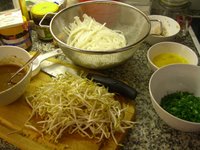
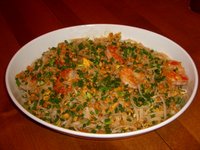
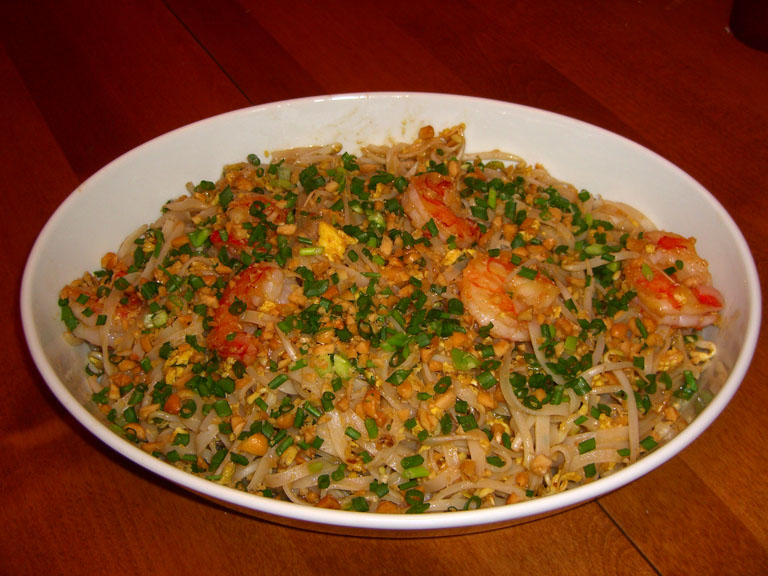
mise en place ... pad thai is served

Anyhoo... I'm attempting to make home versions of these favorites (the naan was a failure - I've tried twice and decided, for now, it's impossible). I'm a little intimidated by the unfamiliar ingredients and cooking techniques - but anything for flavor. I started with Pad Thai, an obvious, but much beloved Thai staple and I couldn't be happier. It was so much easier than I expected and it tasted great, if not authentic. I'm definitely working this into my regular rotation. The predominant flavor of Pad Thai comes from tamarind paste, which I was able to source from an excellent Asian market on the corner of Josefstrasse and Hafnerstrasse, behind the HB, a few doors down from El Maiz (which I'll save for another posting). It's not quite 99 Ranch, but it can cure some cravings. They also serve lunch, popular and not bad, but still mixed cuisine.

Up next... Is it possible to make good, dare I dream, great Phở Chín Nạc at home?

--------------------------------

P.S. What's up the term "ethnic cuisine"? How different does the other ethnicity have to be considered ethnic? If you live in France, is German food "ethnic"? It would also be interested how long it takes "ethnic foods" to be incorporated into the local cuisine, to the point where they are no longer considered "ethnic"? I'm also curious about how other ethnic groups linguistically refer to "American" food. If you live in China, are hamburgers labeled "ethnic cuisine"? Unfortunately, I suspect they just call it fast food.

--------------------------------

Pad Thai Recipe

From Cook's Illustrated...A wok might be the implement of choice in restaurants and the old country, but a large 12-inch skillet (nonstick makes cleanup easy) is more practical for home cooks. Although pad thai cooks very quickly, the ingredient list is long, and everything must be prepared and within easy reach at the stovetop when you begin cooking. For maximum efficiency, use the time during which the tamarind and noodles soak to prepare the other ingredients. Tofu is a good and common addition to pad thai. If you like, add 4 ounces of extra-firm tofu or pressed tofu (available in Asian markets) cut into 1/2-inch cubes (about 1 cup) to the noodles along with the bean sprouts. Serves 4 as a main dish

2 tablespoons tamarind paste or substitute (see Tamarind options in related articles)
3/4 cup water (boiling)
3 tablespoons fish sauce (available at Migros or Coop, look near soy sauce and coconut milk)
1 tablespoon rice vinegar
3 tablespoons granulated sugar
3/4 teaspoon cayenne pepper
4 tablespoons peanut oil or vegetable oil
8 ounces dried rice stick noodles , about 1/8 inch wide (the width of linguine)
2 large eggs
1/4 teaspoon table salt
12 ounces medium shrimp (31/35 count), peeled and deveined, if desired
3 cloves garlic , pressed through garlic press or minced (1 tablespoon)
1 medium shallot , minced (about 3 tablespoons)
2 tablespoons dried shrimp , chopped fine (optional)
2 tablespoons Thai salted preserved radish (optional)
6 tablespoons chopped unsalted roasted peanuts
3 cups bean sprouts (6 ounces) (available at Jelmoli grocery in a refrigerated section behind the fruit counter, along with other speciality Asian food ingredients. I think they're called "Sojabohnensprossen")
5 medium scallions , green parts only, sliced thin on sharp bias
1/4 cup fresh cilantro leaves (optional) (called Koriander here, available at most groceries)
lime wedges

1. Soak tamarind paste in 3/4 cup boiling water for about 10 minutes, then push it through a mesh strainer to remove the seeds and fibers and extract as much pulp as possible. Stir fish sauce, rice vinegar, sugar, cayenne, and 2 tablespoons oil into tamarind liquid and set aside.

2. Cover rice sticks with hot tap water in large bowl; soak until softened, pliable, and limp but not fully tender, about 20 minutes. Drain noodles and set aside. Beat eggs and 1/8 teaspoon salt in small bowl; set aside.

3. Heat 1 tablespoon oil in 12-inch skillet (preferably nonstick) over high heat until just beginning to smoke, about 2 minutes. Add shrimp and sprinkle with remaining 1/8 teaspoon salt; cook, tossing occasionally, until shrimp are opaque and browned about the edges, about 3 minutes. Transfer shrimp to plate and set aside.

4. Off heat, add remaining tablespoon oil to skillet and swirl to coat; add garlic and shallot, set skillet over medium heat and cook, stirring constantly, until light golden brown, about 1 1/2 minutes; add eggs to skillet and stir vigorously with wooden spoon until scrambled and barely moist, about 20 seconds. Add noodles, dried shrimp, and salted radish (if using) to eggs; toss with 2 wooden spoons to combine. Pour fish sauce mixture over noodles, increase heat to high, and cook, tossing constantly, until noodles are evenly coated. Scatter 1/4 cup peanuts, bean sprouts, all but 1/4 cup scallions, and cooked shrimp over noodles; continue to cook, tossing constantly, until noodles are tender, about 2 1/2 minutes (if not yet tender add 2 tablespoons water to skillet and continue to cook until tender).

5. Transfer noodles to serving platter, sprinkle with remaining scallions, 2 tablespoons peanuts, and cilantro; serve immediately, passing lime wedges separately.

Friday, July 21, 2006

flour power

Even though there are so many wonderful bakeries here in Switzerland, offering an impressive array of rustic loaves, I still bake bread. There’s something very satisfying about dough rising and the aroma of baking bread filling my home. But flour shopping is a challenge here. Since there are so many different flour types available in Switzerland, it is important to know what you’re buying so you can get the correct result in your cooking and baking. So here is some basic information on flour and comparisons between US and German flour types (Germany and Switzerland use the same flour rating system), but remember these are only rough guidelines. German flour is very different than US flour and there can be vast differences in flour labeled or numbered the same because of the variation between mills producing what seem like identical flours.

What to use?

Here are the flour types generally available in the US and their closest German counterparts. In the next section, there is a more exhaustive list of Swiss flours and how they can be used.

US Flour Name Description Protein Level Similar German Flour
cake flour white flour with low protein and finely milled so flour feels like satin. Used in high-sugar and angel food cakes. 6.70-8.00% not available
pastry flour made from soft wheats, which are low in protein and are finely milled but not as fine as cake flour 9.00-10.60% not available
all purpose white flour with average protein level suitable for general baking (quick breads, muffins, cookies, pastries, low-sugar cakes and gravies) 11.00-11.80% Weissmehl, Weizenmehl, Zopfmehl, Backmehl
bread flour white flour with high protein level Best for bread making. 11.70-13.20% not available
high gluten flour white flour, much higher in protein and a little darker than standard bread flours. Used for specialty breads like rye breads, Italian hearth, and multi-grain breads. 13.30-15.00% Bauernmehl, Ruchmehl (maybe)
light whole wheat flour white flour with some bran and germ to produce whole-wheat bread
Halbweissmehl
whole wheat flour prepared by grinding the entire wheat kernel. contains at least 95% of the whole wheat berry 12.5-13.5% Vollkornmehl
graham flour coarsely stone ground whole wheat flour.
available in Reformhaus
semolina or durum flour made from durum wheats, unlike white and whole-wheat flours. Granular and usually bright yellow. Used for making pasta. 12.00% Hartweizenmehl

When selecting a flour, the protein or ash content will give you a clue as to what you’re buying (in addition to the picture on the flour bag).

Protein & Gluten– who cares?

In short, less protein is good for cakes, cookies and sauces, while more protein is good for bread, especially rustic, European-style loaves. The amount of protein in flour determines how much gluten can develop in your dough (protein+water=gluten). Gluten is important because it is responsible for the elasticity, extensibility, and gas-retaining properties of yeast-leavened baked goods (read more about protein and gluten). It is important to use a flour that as an appropriate protein level for whatever you are baking.

  • 9% protein = cakes and pastry
  • 10-11% protein = cookies. muffins, sauces
  • 11-13% protein = sandwich bread, pizza, challah
  • 13-15% protein = rustic loaves

Most flour packages in the US and most in Switzerland list the flour’s protein level, either as grams or percent. But I haven’t been able to find any white flour with a protein level below 10% or above 11%, which means you’ll have a tough time finding either cake flour or bread flour here.

One caveat: protein level does not indicate quality or provide a universal standard. The type of wheat and milling techniques greatly affect the flour. So a German flour could be very different from a US flour with the same protein level.

Ash Content

Instead of protein level, German/Swiss flour is usually rated by ash content. Ash measures how much of the entire wheat kernel is in the flour. This provides some indication of the flour’s grade and/or milling quality. This is important for professional bakers, but not a critical selection criteria for most casual home bakers. I haven’t been able to find any useful information on how ash content should be used to select flour.

White vs. Whole Wheat

White flour contains only the endosperm, while whole-wheat also contains some or all bran and germ. Since germ and bran impede the development of a good, elastic gluten (remember why gluten is important?), high protein white flour is much better for making bread. When using whole-wheat flour, you typically use a combo of white flour and whole-wheat flour so the dough will have enough gluten (from the white flour) to rise properly.

However, high protein white bread flour (above 11%) is not available in Switzerland. So you may want to use one of the high protein flours like Halbweissmehl (13%) or Ruchmehl (14%) which are partially whole-wheat and have high protein levels. This will take some experimentation. If your dough doesn’t rise properly, has a too dense crumb, or collapses after baking, this may be a sign of not enough gluten being formed. So you could try substituting in a small percentage of Weissmehl to counteract the effects of whole wheat flour.

Flours Available in Switzerland

Here are some of the flours I’ve found at Migros, Coop, Globus, Jelmoli, and Reformhaus. I’ve included my best guess on what this flour is in US terms.

German Name Protein US Counterpart Description
Weiss-mehl, weizenmehl
all-purpose white white flour milled from hard wheats or a blend of hard and soft wheats
Backmehl 11g

Halbweiss-mehl 13g light whole wheat flour with some bran and germ to produce whole-wheat bread
Zopf-mehl 11g white, low-protein
Bauern-mehl 15g country bread a little rye includes 5% rye flour
Ruch-mehl 14g "grey" flour, wholemeal flour is this whole wheat?
Vollkorn-mehl 13.5g whole wheat flour with all bran and germ
Urdinkel-mehl 14g spelt

Flour Numbers

German and French flour are often numbered (using different schemes), giving some indication of how the flour can be used. The higher the type number, the stronger the flour, meaning more protein. The below chart gives the closest US flour counterpart to the German flour numbers.


German
Flour #

Ash Content

Protein

US
Flour #

US Flour Name

Description

405

.405%

~9%

Type 00

pastry flour

This is a very fine flour similar to our cake flour. It can be used for sauces, cookies, pies and other baked goods. It is the most popular household flour in Germany.

480

.48%

11%


550

.50 to .58%

~11%

Type 0

all-purpose flour

stronger flavor than 405, usually used for bread baking

This flour is good for baked products leavened with yeast. It is a little finer than our all-purpose or plain flour. It is used for white bread.

650


bread flour

strong bread flour

700

.70%

11%


812

.64 to .89%

~14%

Type 1

high gluten flour

This flour is used for light-colored breads made of wheat and rye flour.

1050

1.050 %

~15%

Type 2

first clear flour

This flour is darker than our unbleached flour. It is used for darker-colored breads made of wheat and rye flour made at home.

1600

1.6%

~13%


whole wheat

This flour is used for darker-colored mixed wheat and rye breads.

1700

1.7%


Note:
German flours, even the Type 405 which is the closest equivalent to Cake Flour, generally have a minimum of 10% protein. Consequently, it is very hard to make a cake or pastry recipe written for English speakers with German flour, as the protein content is too high.

Monday, June 19, 2006

limey

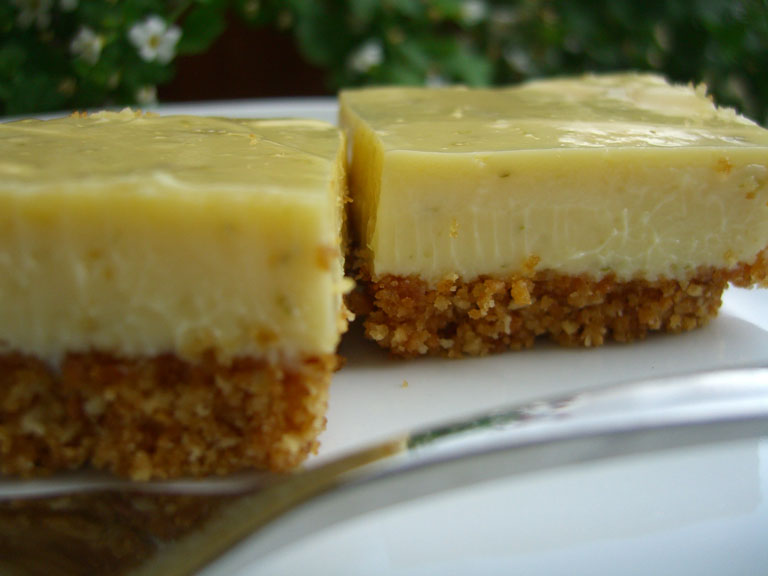
In memory of my favorite San Francisco ferry building treat - key lime tartlets from Miette - I made Key Lime Bars from a Cook's Illustrated recipe. Yum. In fact, I like all things lime. Lime sherbet (also from Cook's) is another favorite.
Crust
5 ounces animal crackers
3 tablespoons packed brown sugar (light or dark)
Pinch table salt
4 tablespoons unsalted butter , melted and cooled slightly
Filling
2 ounces cream cheese , room temperature
1 tablespoon grated lime zest , minced
Pinch table salt
1 (14-ounce) can sweetened condensed milk
1 egg yolk
1/2 cup fresh lime juice , either Key lime or regular
Garnish (optional)
3/4 cup sweetened shredded coconut , toasted until golden and crisp

1. Adjust oven rack to middle position and heat oven to 325 degrees. Cut about 12-inch length extra-wide heavy-duty foil; fold cut edges back to form 7 1/2-inch width. With folded sides facing down, fit foil securely into bottom and up sides of 8-inch-square baking pan, allowing excess to overhang pan sides. Spray foil with nonstick cooking spray.
2. TO MAKE THE CRUST: In workbowl of food processor, pulse animal crackers until broken down, about ten 1-second pulses; process crumbs until evenly fine, about 10 seconds (you should have about 1 1/4 cups crumbs). Add brown sugar and salt; process to combine, ten to twelve 1-second pulses (if large sugar lumps remain, break them apart with fingers). Drizzle butter over crumbs and pulse until crumbs are evenly moistened with butter, about ten 1-second pulses. Press crumbs evenly and firmly into bottom of prepared pan. Bake until deep golden brown, 18 to 20 minutes. Cool on wire rack while making filling. Do not turn off oven.
3. TO MAKE THE FILLING: While crust cools, in medium bowl, stir cream cheese, zest, and salt with rubber spatula until softened, creamy, and thoroughly combined. Add sweetened condensed milk and whisk vigorously until incorporated and no lumps of cream cheese remain; whisk in egg yolk. Add lime juice and whisk gently until incorporated (mixture will thicken slightly).
4. TO ASSEMBLE AND BAKE: Pour filling into crust; spread to corners and smooth surface with rubber spatula. Bake until set and edges begin to pull away slightly from sides, 15 to 20 minutes. Cool on wire rack to room temperature, 1 to 1 1/2 hours. Cover with foil and refrigerate until thoroughly chilled, at least 2 hours.
5. Loosen edges with paring knife and lift bars from baking pan using foil extensions; cut bars into 16 squares. Sprinkle with toasted coconut, if using, and serve. (Leftovers can be refrigerated up to 2 days; crust will soften slightly. Let bars stand at room temperature about 15 minutes before serving.)

Friday, June 16, 2006

just like honey

If at first you don't succeed, bake, bake again. This recipe was a failure last time; bad honey makes bad bread. After a series of honey tastings, I tried again and it's almost perfect. Yea!

Friday, June 09, 2006

cherry cherry bo berry

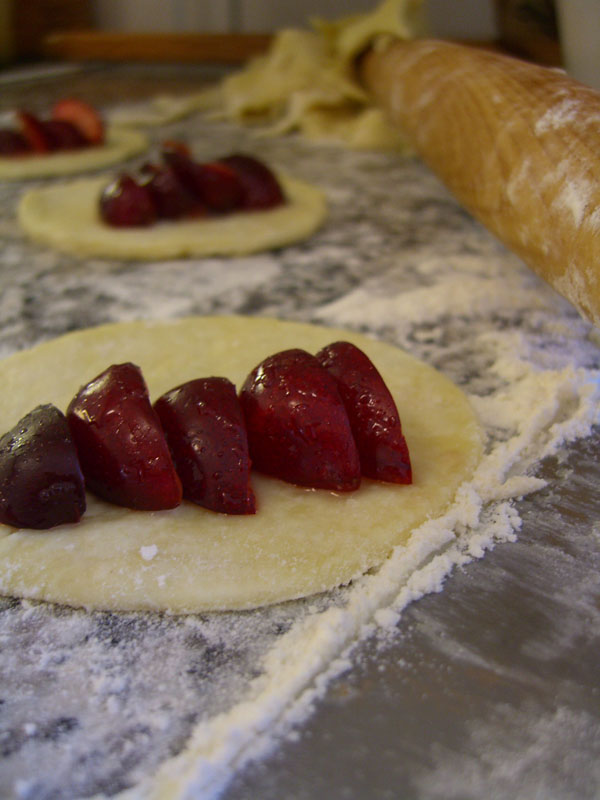
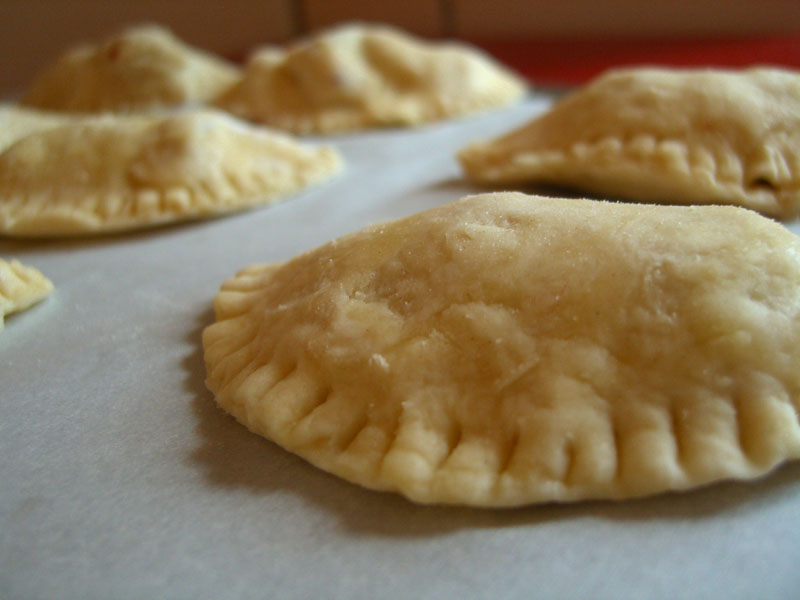
Why do all of my cookbooks only have one entry under "cherries": cherry pie? There must be hundreds of interesting things to do with this super seasonal delight. Let the search begin. But meanwhile, cherry turnovers will have to suffice. Despite seriously underestimating the amount of sugar required to make cooked fruit appropriately sweet (why do I always second second guess the recipe?), they are still quite yum!

Of course, turnovers are all about the dough (as my husband reminds me) and this sour cream dough was great. (I will post later about my other fav dough that uses a cool smearing method to create extra flakiness). The recipe (below) comes from The Fannie Farmer Baking Book, which has given quite poor results on several other recipes, so I was pleasantly surprised.

Preheat oven to 425F (220C). Lightly grease cookie sheet or line with parchment paper.

Sour Cream Dough: 1 cup flour, 1/2 tsp salt, 4 TB unsalted cold butter, 1/3 cup sour cream, 1 TB milk
Mix flour and salt. Cut butter into flour (like with pie dough) until resembles coarse bread crumbs. Add sour cream and mix lightly with fork until just moistened. Sprinkle on milk and mix again with fork. Gather dough in your hand and if it holds together, it's ready. Otherwise, keep adding a couple drops of milk until it does - don't get it too wet or mix too much. Once ready, form dough into cake 1-inch thick. Dust with flour. Roll into circle 1/8 thick. Cut 4.5-inch circles.

Fruit filling: 1.5 cups cherries, peaches, apricots, plums, or whatever. Pit and quarter the fruit.

Assemble: 7 TB sugar, 2 TB cream
Place a little fruit on one side of each dough circle - not too much or dough will break. I used about 3-4 cherries in each. Sprinkle about 2 tsp of sugar on each fruit mound - do not skimp! Fold over dough to form half-moon shape. Press edges together with fingers, then crimp with fork. Place turnovers on cookie sheet, about 1-inch apart. Brush top of each with cream then sprinkle with sugar. Bake for 20 mins until pastry is lightly browned (rotate once if necessary). Eat within one day.

Wednesday, May 31, 2006

marvelous marbella

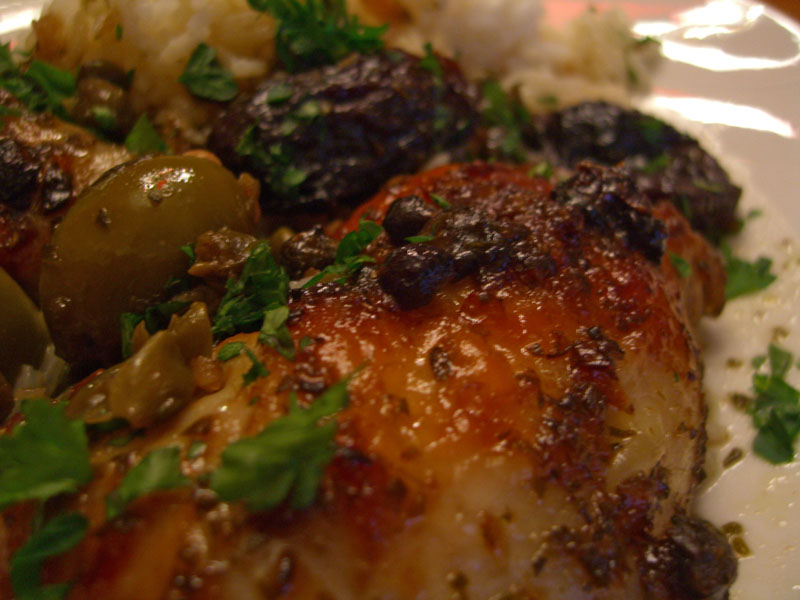
My friend, Rachel, made Chicken Marbella for me just after I had my first baby. It was so good we're still talking about it two years later. I finally got around to making it myself and we're hooked. I'm going to make it every week until we get sick of it. However, I found an error in my recipe, which may be contributing to our obsession for this dish. My recipe calls for either 4 chicken breasts and 4 thighs or 1 chicken quartered. I thought this was strange because 1 chicken quartered is clearly much less that 4 breasts and 4 thighs. This was especially evident when I tried "sprinkling" the cup of brown sugar over the 1 chicken quartered - that's a lot of sugar for one little bird. So when I looked for recipes on the internet, I discovered that most recipes call for at least 2 chickens quartered and some even 4, with the same ratios for the other ingredients. So the sugar in my dish has been 2-4 times the intended concentration. Shall I ignore this little detail and continue my sugary ways? Time will tell.

Friday, May 19, 2006

frog cake


Frog cake for my two year old. Bad photo but fun.

Monday, May 15, 2006

ribs

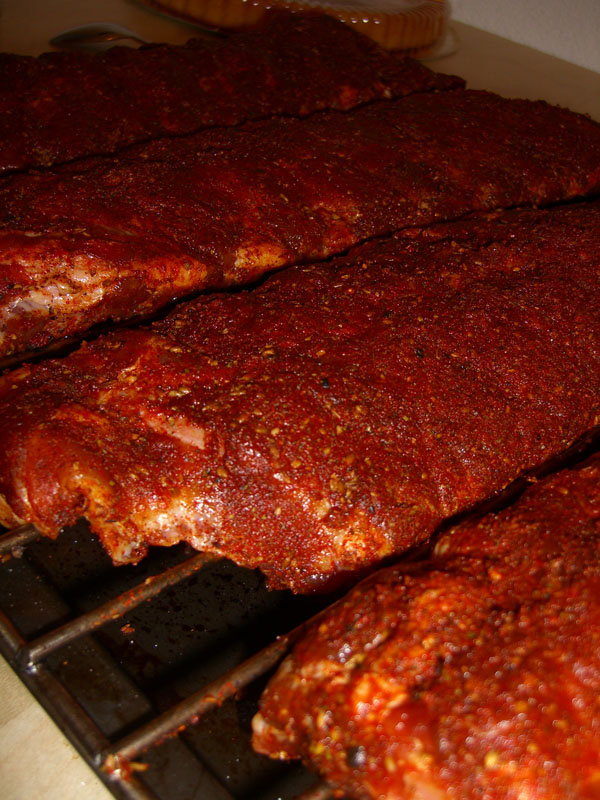
Just a reminder that pork ribs are so good. Get cooking.

My husband treated me to a special mother's day treat and wow! Best ribs I ever ate. He used the Cook's Illustrated recipe, which is members only, so I don't feel comfortable reposting it here. But I highly recommend subscribing to their website.

crust and crumb

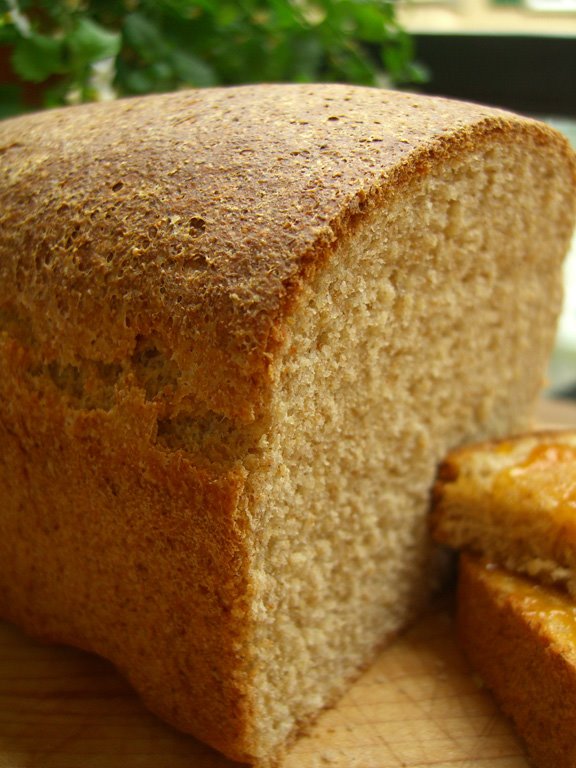
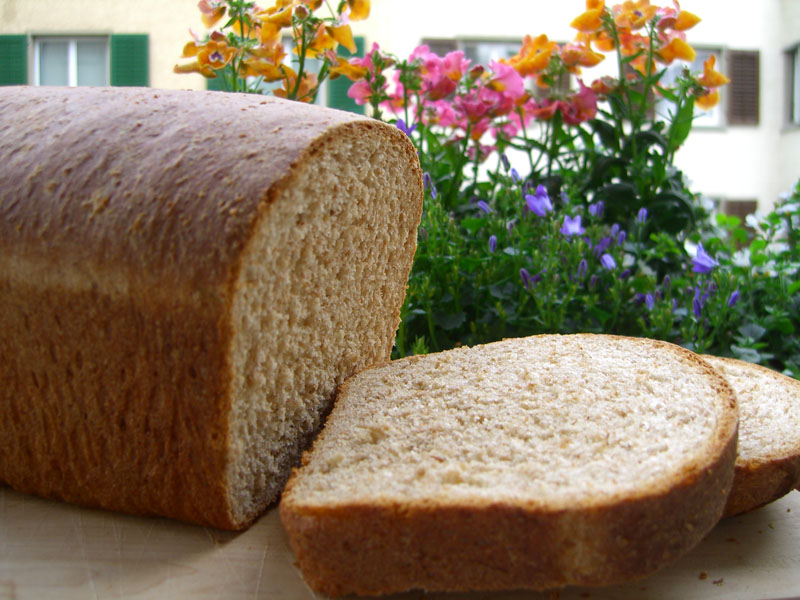
This lovely loaf rose so tall in the oven and I was proud. The crust was golden, the crumb delicate. Then my first bite. So sad when bread goes bad. The mysterious bitterness haunted us for days until we finally decided the honey was the culprit. Oh, Schweizer Wald Honig - you do me wrong! So now I'm on the search for the perfect honey. Let me rephrase. I'm on the search for a perfect honey available in Switzerland. I already know that Tupelo is "The Honey" - may all other honey bow before it. But alas, I am far from home.

So how should one select honey without being able to taste it? Since the bread debaucle, I've already tried four new ones, three duds and one perfectly average. The packaging is enticing, but deceptive. And price is no indication of quality. Plus, taste is subjective. Based on hazy recollections of previous favorable honey encounters, I've decided to limit my search to light colored honeys from France. I can broaden from there if necessary. Suggestions are welcome.

Thursday, May 04, 2006

pita bread

I've made pita bread before but this time every last one of them puffed up in the oven, just like they are supposed to. It's so satisfying and delicious. Now where's that hummus?


Per request, here's the recipe:

Combine 3 cups bread flour (14g protein), 1.5 TB sugar, 1.5 tsp salt, 4 tsp dry yeast. Add 2 TB melted butter and 1.25 cups room-temperature water. Mix on low speed to combine then knead for 10 minutes (6-8 minutes in stand mixer with dough hook) until dough is smooth, elastic and passes the windowpane test (meaning you can stretch the dough and see through it and it doesn't break). Add flour or water if needed (try not to add flour unless it's is an absolute sticky nightmare). The dough should be tacky but not super sticky. Transfer dough to oiled bowl and turn the dough over to cover it (if not, the dough will dry out on top, restricting the rise). Cover with plastic wrap and let rise until double, 1-1.5 hours.

Punch down down, divide into 8 pieces, roll each into a ball. Cover and let rest for 20 minutes. Preheat over to 450F, preferably with pizza stone - you can alternatively use upside down baking sheet.

Roll each ball of dough into a circle, about 8 inches in diameter and 1/8 inch thick. Spray pizza stone, wait 30 seconds, then place as many dough rounds as will fit directly on the pizza stone (1 or 2 in my oven). Bake until dough puffs into a baloon, about 3 minutes, wait 30 seconds, then remove to rack to cool. If you leave the bread in the oven too long, they will not deflate to flat disks and will be brittle. Don't worry if some don't puff, they will still taste good.

It might sound harder than it is. Just try it, it's fun.

Wednesday, April 05, 2006

dutch-processed cocoa powder

If you've bought cocoa powder in Zurich, perhaps you're wondering whether it's Dutch-processed or not. Perhaps not.

Here's how to tell the difference:
"After a bit of searching, I was able to find out that ‘Dutch-Processed’ cocoa powder is treated with the Alkaline substance potassium carbonate. Your answer can be found by looking at the packaging of the cocoa powder in the zutaten section (generally on the back). If it is processed, it will list the ingredient Kaliumkarbonat E 501. If this is not listed, then the cocoa powder will have a natural acid that will react with baking soda. Most cocoa powders in Europe are dutch-processed, and aside from the listing of potassium carbonate, there is no real method of checking whether or not the powder was processed." - Jack McNulty of laughinglemon.ch

I have not thoroughly tested this theory yet. The "Ligne Patisserie" cocoa powder I bought from Migros only lists one ingredient: Kakao. But I still suspect that it is dutched. Cook's Illustrated has a lengthy article on Dutch-processed cocoa that says "Natural cocoa looks beige; Dutch-processed cocoa boasts a deep, dark, rich-looking brown". Mine looks like the latter. So I will proceed assuming that it is dutched.

Here's why you should care (source):
It does make a difference since Dutch-processed cocoa is less acidic (or more alkaline) than a regular cocoa such as Hershey's. Dutch-Processed Cocoa Powder is neutral and does not react with baking soda, so it must be used in recipes calling for baking powder, unless there are other acidic ingredients in sufficient quantities used.
In constrast, when natural unsweetened cocoa powder (an acid) is used in recipes calling for baking soda (an alkali), it creates a leavening action that causes the batter to rise when placed in the oven.

Substitutions:
3 TB Dutch-processed cocoa = 3 TB natural cocoa powder plus 1/8 teaspoon baking soda
3 TB natural cocoa = 3 TB Dutch-processed cocoa plus 1/8 teaspoon cream of tartar, lemon juice or vinegar

brown sugar

Found! Globus on Bahnhoffstrasse recently had real brown sugar in the flour/sugar section. CHF6 for 500g. This was real brown sugar, not those cane sugars that lots of the stores around here carry. This brown sugar was really dark, almost black, with a very strong molasses flavor. Yum yum.

You can also make your own by simply adding about 1-2 TB of molasses to 1 cup granulated sugar. Mix with a fork until well blended. I learned this tip from Jack McNulty of laughinglemon.ch, who also recommended buying pure molasses (or "melasse" here) from health food stores because it doesn't contain extra additives that affect flavor among other things.

Now you can finally have that nice hot bowl of steel cut oats with brown sugar and cinnamon. Yea!

vanilla extract

Found! El Maiz has "McCormick Extracto Liquido de Vainilla." Yea!

I briefly considered making my own - here are instructions.

According to Jack McNulty of laughinglemon.ch, the Swiss use vanilla sugar instead of vanilla extract because vanilla sugar provides a stronger vanilla flavor. Just substitute a small amount (5-10%) of the sugar in your recipe with vanilla sugar. You can make vanilla sugar but putting a split vanilla bean in a container with powdered sugar. Periodically replenish the sugar and vanilla bean.

treasure hunt

Here's all the food items not available or hard to find in Zurich. I'll post as I discover sources for or information about any of these items.
  • brown sugar
  • vanilla extract
  • blue food coloring
  • corn tortillas
  • swiss chard
  • turnips
Related Posts Plugin for WordPress, Blogger...